
- Home
- Andre Norton
Lost Lands of Witch World Page 2
Lost Lands of Witch World Read online
Page 2
In fact, she is nothing like that helpless maiden. She has had a plan all along, and proceeds to not only escape her bondage by her own wits and courage but to take the captive Witch with her. All by herself—no hero required.
It’s time for a little perspective here. Nineteen sixty-three had far more in common with the stodgy and uptight fifties than the swinging sixties. There were a lot of things that “nice” girls “didn’t” do, and I’m not talking about sex. Girls were supposed to be passive. Girls didn’t have adventures. Girls didn’t take the initiative. Try renting one of the classic old science fiction movies, like Them, and you’ll see what I mean—the female scientist plays second fiddle to her father, totters around on high heels in a skirt too narrow to permit a reasonable stride, and requires an untrained military officer to do her observations in the giant ant nest for her. The women in science fiction books were mostly similar. They existed as foils for the young heroes. When they had any power whatsoever, they were generally evil and existed only to be put in their place by the heroes—or else, to fall in love with them and see the evil of their ways.
Andre Norton’s women of Witch World were the antithesis of what girls were “supposed” to be like.
I seem to recall buying Witch World in May of 1963, so at that point in time, JFK and Pope John XXIII were still alive. Martin Luther King Jr. had not yet made his famous “I have a dream” speech. The cost of a first-class stamp was five cents. The Beatles were just beginning their rise to popularity in the U.K.; over here, no one had ever heard of them. Rock and roll was hardly mainstream; it still had something of a tainted image. In those days (unlike now, when a top twenty song will show up as Muzak within six months), if you had played a rock hit in a grocery store, you might have been lynched. Instead, the Grammy for that year went to “I Left My Heart in San Francisco,” and Bible-school classes were burning Elvis Presley records as being “detrimental to the morals of youth” (sound familiar?).
At the time, I was into folk music, myself; I would listen to a folk music show that was on after 10:00 P.M. on radio station WLS—secretly, because I wasn’t supposed to be up that late. This, by the way, was an AM station—no one had ever heard of FM. Peter, Paul, and Mary had been recording for just under three years. WLS played the real stuff: the protest songs, the things that had been banned from many radio stations, such as Pete Seeger, Bob Dylan, and the Weavers—in 1963 McCarthyism was making its last gasp, but it was still there.
The big movie of the year was Lawrence of Arabia, which starred an unknown fellow by the name of Peter O’Toole. It aired in what is now “the director’s cut” so long it required an intermission.
Not even science fiction writers envisaged PCs, CDs, VCRs, DVDs, or the the Internet. We were more afraid of ICBMs than disease—plague was a thing of the past, and no one could imagine that there would ever be another disease that science couldn’t find a cure for. But on the pessimistic side, the Cuban Missile Crisis had only just been sorted out, and On the Beach and nuclear holocaust seemed not only likely, but probable; many of Andre Norton’s books took place in a post-nuclear-war world. Many science fiction authors were in the Ban the Bomb movement and wrote openly antiwar stories. Unlike those in more visible genres, their activism was ignored. After all, “everyone knew” that science fiction was nothing but escapist trash read by bespectacled boys in short pants.
Transistors were the highest tech available. Man had not only not gone to the moon, he had barely taken the first steps into orbit. My father worked on one of the first commercial computers—it occupied the space of a ten thousand-square-foot building and produced the computing power of one of today’s credit-card-sized calculators.
This was the year that Sylvia Plath published The Bell Jar and Betty Friedan produced The Feminine Mystique, but neither book, so seminal to the budding Women’s Liberation movement, made any impression in the suburbs where I lived. Far more important to the housewives where I lived was the new program on National Educational Television (not yet called PBS), The French Chef, with Julia Child. What went on the dinner table and could be used to impress Father’s business colleagues was supposed to be more important that what Mother or Sister might be thinking or feeling. I had vaguely heard of The Feminine Mystique but only because comedians on the Johnny Carson show made jokes, calling it The Feminine Mistake. I had never heard of Sylvia Plath, and I doubt if I could have gotten my hands on a copy of either book.
Oh, there was feminist science fiction, but it was highbrow stuff and not really accessible to a thirteen-year-old—okay, a bright thirteen-year-old, but still, my brain wasn’t entirely up to it, and my hovering-on-puberty body wasn’t at all comfortable with some of the concepts being bruited about. And most of it wasn’t being published where I could get my hands on it.
This was accessible, enjoyable, exciting. Girls who did not wait around to be rescued but dealt with their intolerable situations by themselves. Women who wielded executive power without turning a hair, and men (or at least, the men of Estcarp) who were fine with that.
But outside of Estcarp, the men weren’t “fine” with that, which made it a lot more like the world I knew, and somehow, that made the rest of Witch World even more fascinating. Okay, the Witches were cool and something to aspire to, but Loyse was a girl not unlike me. She was smart; but she hid how smart she was. She knew that she had to escape her situation if she wasn’t to be made into something less than a serf, but she was clever and planned well in advance. On the very eve of her marriage-by-proxy, she disguised herself as a boy with clothing, arms, and armor she had purloined while pretending to select wedding goods, and escaped through secret tunnels that she had personally discovered. Now Loyse was someone I could identify with.
I was hooked. I tore through the book, discovering that it remained a mix of fantasy and science fiction, with the great enemies behind everything, the Kolder, revealed as alien invaders, masters of high technology that was complete anathema to Witch World. Now, technology as the enemy as well as the savior of mankind was not new—science fiction writers were way ahead of the mainstream in creating tales of technological dystopias. But this was the first time that I had ever read a glorification of a fantastical, medieval setting set up in stark contrast to a hideous technological nightmare that threatened to overwhelm it. Medievalism was somehow always “barbaric” in the science fiction I had read, even the dystopian science fiction. “Civilization” was always rooted in modernism, and science, not magic, saved the day, even in a dystopia—unless, of course, there wasn’t really supposed to be a happy ending (as was the case in Orwell’s 1984 or Huxley’s Brave New World).
Witch World was different. This was a revelation, an epiphany. I reread it over and over, not the least because at the end of the book it was very clear that there was more, much more, to come. I was used to books that finished their stories in one volume. The day of trilogies, tetralogies, and series books had yet to come. There were Tolkien’s trilogy, and the Conan series, Edgar Rice Burroughs, and a few others—but not much more. Just as there was not much in the way of fantasy available, there were not many sequels, either. Andre Norton took a bold step in that direction with Witch World, which brought an end to a chapter, but by no means the entire story, of her creation.
It was a gamble, but it certainly paid off. Witch World was followed in 1964 by Web of the Witch World.
Once again, it was billed as science fiction, not fantasy—though I must admit that the technological elements are much more in evidence. Here is that original cover blurb:
Simon Tregarth, whose own Earthly prowess had won him a throne and a witch-wife in an alien world, knew that both triumphs were precarious as long as the super-science of Kolder held a foothold on that planet. And his premonitions were right when those invaders from another dimension made their final diabolical strike for total conquest. Andre Norton’s WEB OF THE WITCH WORLD is a terrific novel of scientific marvel, other-world color, and sword-and-sorcery action tha
t will thrill and delight every reader.
In the manner of blurbs everywhere, in the inside cover blurb the witch Jaelithe had suddenly become a “princess” and Simon had a “throne”—which probably came as a surprise to Norton and to anyone who expected an Edgar Rice Burroughs pastiche. It wasn’t anything of the sort, obviously, and in the course of the story Andre Norton gracefully tackled another aspect of the lot of a woman who stands up in her own light—the need and the desire for freedom within a partnership of marriage, and how both partners must compromise within freedom. Were you to have told this to the average teenager who was powering his or her way through the book, that reader would have stared at you in blank astonishment. It simply would never have occurred to the young readers of this book that there was anything there but a fantastic story. The best in science fiction and fantasy is always subversive, whether the subversiveness is overt or covert, and in Web of the Witch World Andre Norton proved that she has always been a mistress of the covert variety. Here was a topic that feminist literature had only begun to explore—the frustration of a woman trying to force herself into a role for which she was ill-equipped out of love—suddenly presented with the opportunity to have her old life back. But at what cost?
For Jaelithe suddenly discovers she has not lost her witch powers when she married and mated with Simon. In fact, she discovers that she has entirely new powers shared with him.
And Loyse finds herself the prisoner of the man she had been forced to wed and had discarded.
And behind it all are the machinations of the Kolder. Jaelithe must learn a new sort of power. Simon must learn how to allow his wife to be herself. Only then can they defeat the Kolder, for united they are infinitely more than the sum of their abilities.
Along with the times, Andre Norton’s work was a-changing.
Nineteen sixty-five brought Three Against the Witch World and the beginning of a new branch to the story, that of Simon and Jaelithe’s three children, Kyllan, Kemoc, and Kaththea—wizard, warrior, and witch. All these books had cover art and frontispieces by Jack Gaughan; in Andre’s home in Tennessee is a real treasure, a huge piece of drawing paper covered with the sketches Jack made as Andre described her world and the people in it. There are the Witches, the Falconers, the Kolder and their dreadful machines. It is an amazing piece.
The blurb for Three Against the Witch World admits that the novel is a fantasy:
North, East, South, West . . . the offspring of Simon Tregarth, half earthling, half witch-brood, realized that they alone could perceive the four directions—for everyone else, there was no East! It was a blank in legend and history. And when new menaces threatened, the Tregarths realized that in that mental barrier there lay the key to all their world . . . somewhere to the unknown eastward must lie the sorcery that had secretly molded their destinies!
At long last . . . perhaps thanks to the increasing popularity of the Lord of the Rings trilogy, which was now widely available in its legitimate and unabridged Ballantine version—the publishers were willing to allow the Witch World books out of the science fiction disguise. There are no elements of science fiction in this book. The Kolder are barely mentioned. Simon and Jaelithe are absentee parents, caught up in defending Estcarp, when Simon himself vanishes, and Jaelithe uses her magic to find and join him—somewhere (we don’t learn where for several books to come). Kars rises up as the enemy to strike Estcarp, and the Witches must use the most extreme measures to keep them out, summoning enough magic to make the very land bar the enemy passage.
And for the first time, Andre Norton touches on the theme of what can happen when anyone who holds power does so without willingness to compromise—for the Witches of Estcarp, mired in their old ways and unwilling to acknowledge anything new or different, are offended that Simon and Jaelithe continue to exercise magic together, and appalled that their children, female and male, also do so. And in so doing, the Witches themselves become an enemy of another sort, one that is harder to deal with—the enemy that is a part of you. They attempt to force the sister, Kaththea, into their ranks, defying the wishes of her parents who forbade any such thing. Escape is the only option here, as Kyllan, Kemoc, and Kaththea seek to flee into the East that only they can see, without knowing why the East is forbidden to those of the Old Race.
What they find is the land of Escore, where legends walk—and where their kind is legend. They have gone from one peril into another, into a land where, in the long past, those who had sought after power for the sake of power had unleashed an evil that still lingered. An ancient and uneasy balance had been struck between good and evil in Escore, and the three out of Estcarp are the straw that unbalances it and brings war again.
Andre Norton had no need to make copies of the formula that made The Lord of the Rings a success; she had long since become a master of the craft of storytelling, and the Witch World books go on a path all their own. This book is all about the abuse of power and its consequences. You see that in the “present” as the Witches abuse their power and drive the triplets into Escore. You see it in the past, in Escore, where abuse of power has already created great and terrible evil. It is also about making the wrong kind of compromise—a compromise with evil, which only allows evil to grow stronger. I should be remiss if I failed to mention that this book and the other two of the set are told in that most difficult of “voices,” first person, from the viewpoint of the eldest of the triplets, the warrior Kyllan.
Once again, the ending of the book only ends a chapter; there is going to be a war in Escore of good against evil. Some of the Old Race—families, with women and children—come to join in that war and perhaps make a place for themselves when—if—the war is won. It is clear that there is much more to come.
But not immediately. Nineteen sixty-five also saw yet another branch from the Witch World tree. The Year of the Unicorn, which also had interior art by Gaughan, showed readers that there was more to Witch World than Simon and Jaelithe and their offspring, that the Kolder threatened not just Estcarp but an entire world, giving us two linked and yet separate storylines—Estcarp and Escore, and High Hallack and the Dales. Alas, it also brought a step backward, for there is not a single word about fantasy in the blurb—no, Gillan of the Dales faces a super-science challenge.
And by this time, Andre Norton established that series books were not only possible but profitable. The series has been in production for forty years now, and I do not believe that any of the books has ever been out of print for very long.
I should also point out something else; these books were all written long before the advent of personal computers—which meant every draft had to be handwritten, transcribed, typed, and retyped. It took forever—and yet Andre Norton was producing no fewer than three and as many as five books a year, plus short fiction. Now that is the definition of prolific.
For instance: 1963, the year that Witch World was published, also saw publication of Judgment on Janus and Key Out of Time. Nineteen sixty-four brought Web of the Witch World, Ordeal in Otherwhere, and Night of Masks. Nineteen sixty-five meant a whopping five books in publication—two Witch World books and also Quest Crosstime, Steel Magic, and The X Factor. One has to wonder what Andre would have produced had computers been available.
Three Against the Witch World was followed by Warlock of the Witch World. As Three Against the Witch World is told from Kyllan’s viewpoint, Warlock of the Witch World comes from Kemoc’s. And here is a new theme—that a clever, evil man can wear a face that fools anyone who doesn’t examine him and his deeds closely. Kaththea consorts with someone who is thought to be a friend, only to discover that he is the enemy. She does so partly because he is accepted by the People of the Green Silences, and partly because he offers something she wants badly. She walks into the situation with the best of intentions, but by willfully refusing to see the signs of trouble is herself corrupted, and nearly brings disaster down on everything and everyone she cares for.
Sorceress of the Witch World, told from
Kaththea’s viewpoint, brought this storyline to a close in 1968. In trying to save Kaththea, Kemoc had struck her with half-learned magic, and as a consequence she has been stripped of all her magical learning. Unfortunately, this leaves her vulnerable to evil influence, with her powers crippled. She intends to go back to Estcarp to try and find help. Instead, fate has other plans, bringing her into another part of Escore, where she must use what she learned so painfully about evil masquerading as good to decide whether or not the ancient power she finds there is boon or bane. The themes in this book are sophisticated and complex, and there are few easy answers. Kaththea is abducted by nomadic hunters—she is forced to become the apprentice to their Wise Woman, who herself is of witchblood out of Estcarp and has served in that capacity for several of the short-lived nomads’ generations. The Wise Woman binds Kaththea to these people—yet she does so out of her own sense of obligation and duty, and a desperate need to find someone who can protect them. Kaththea concentrates so much on finding a way to break that obligation that she fails to watch for danger despite being told that raiders are a hazard. As a consequence, the tribe that is depending on her is slaughtered. She escapes, but how much of that doom is she responsible for? Her mistakes nearly brought disaster when she sought out great power previously—her desire for an equal partnership, like her parents and brothers have found, made her blind to the faults in a masquerading enemy. Dare she trust herself again when presented with a similar situation? Kaththea has to overcome the dark places in her own heart and find the courage to face her own demons. Andre Norton accomplishes all of this with an economy of language that still astonishes me. Kaththea is a whole, living, breathing person, with faults and virtues—someone who makes many fantasy heroines look like cardboard cutouts.
 Ride Proud, Rebel!
 The People of the Crater
 Rebel Spurs
 The Gifts of Asti
 Space Service
 Perilous Dreams
 Plague Ship
 Voodoo Planet
 Star Born
 The Zero Stone
 Knave of Dreams
 Five Senses Box Set
 The Time Traders
 Catfantastic II
 Star Hunter
 The Defiant Agents
 Key Out of Time
 Space Police
 The Monster's Legacy
 Imperial Lady (Central Asia Series Book 1)
 All Cats Are Gray
 Storm Over Warlock
 Warlock
 Firehand
 Echoes In Time # with Sherwood Smith
 Ciara's Song
 The Sioux Spaceman
 Firehand # with Pauline M. Griffin
 The Forerunner Factor
 The Jargoon Pard (Witch World Series (High Hallack Cycle))
 Trey of Swords (Witch World (Estcarp Series))
 Children of the Gates
 Atlantis Endgame
 Red Hart Magic
 Steel Magic
 Beast Master's Circus
 Iron Butterflies
 At Swords' Points
 The Iron Breed
 A Crown Disowned
 Moon Called
 Ralestone Luck
 Tales From High Hallack, Volume 3
 FORERUNNER FORAY
 High Sorcery
 Stand to Horse
 Flight of Vengeance (Witch World: The Turning)
 Gods and Androids
 Derelict For Trade
 Ice and Shadow
 Wraiths of Time
 Quag Keep
 The Scent Of Magic
 Mark of the Cat and Year of the Rat
 Storms of Victory (Witch World: The Turning)
 Catseye
 The Defiant Agents tt-3
 The Opal-Eyed Fan
 Sword Is Drawn
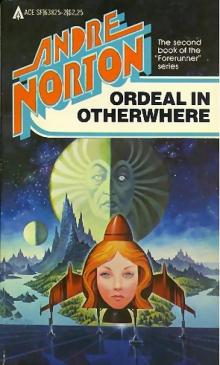 ORDEAL IN OTHERWHERE
 Tales From High Hallack, Volume 1
 Wheel of Stars
 On Wings of Magic
 Ware Hawk
 The Key of the Keplian
 Ride Proud-Rebel
 Sea Siege
 Lost Lands of Witch World
 Horn Crown (Witch World: High Hallack Series)
 Three Against the Witch World ww-3
 Wizards’ Worlds
 Secret of the Stars
 Yankee Privateer
 Scent of Magic
 Beast Master's Planet: Omnibus of Beast Master and Lord of Thunder
 The White Jade Fox
 Silver May Tarnish
 Beast Master's Quest
 Knight Or Knave
 Sargasso of Space (Solar Queen Series)
 The Warding of Witch World
 Uncharted Stars
 Ten Mile Treasure
 The Game of Stars and Comets
 On Wings of Magic (Witch World: The Turning)
 Tales From High Hallack, Volume 2
 The Gate of the Cat (Witch World: Estcarp Series)
 Andre Norton - Shadow Hawk
 Merlin's Mirror
 Serpent's Tooth
 Sword in Sheath
 Ride Proud, Rebel! dr-1
 The Magestone
 The Works of Andre Norton (12 books)
 Andre Norton: The Essential Collection
 The Stars Are Ours! a-1
 Moon Mirror
 Warlock of the Witch World ww-4
 Garan the Eternal
 The Andre Norton Megapack
 Dare to Go A-Hunting ft-4
 The X Factor
 Web of the Witch World ww-2
 The Knight of the Red Beard-The Cycle of Oak, Yew, Ash and Rowan 5
 Star Rangers
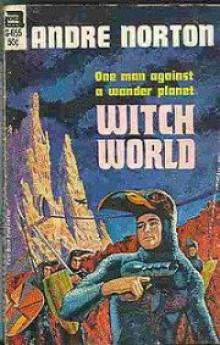 Witch World ww-1
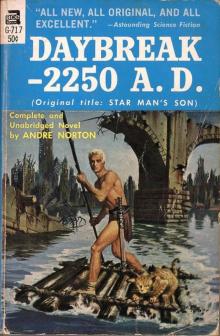 Daybreak—2250 A.D.
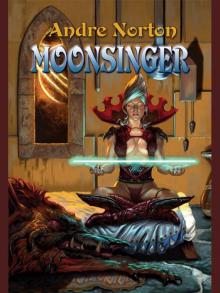 Moonsinger
 Redline the Stars sq-5
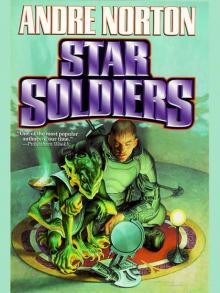 Star Soldiers
 Empire Of The Eagle
 The Hands of Lyr (Five Senses Series Book 1)
 Android at Arms
 Lore of Witch World (Witch World Collection of Stories) (Witch World Series)
 Trey of Swords ww-6
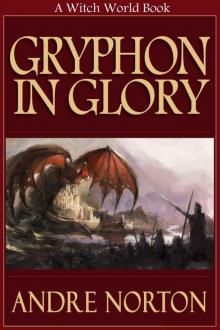 Gryphon in Glory (Witch World (High Hallack Series))
 Octagon Magic
 Dragon Magic
 Three Hands for Scorpio
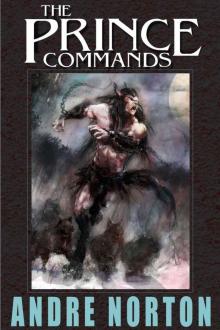 The Prince Commands
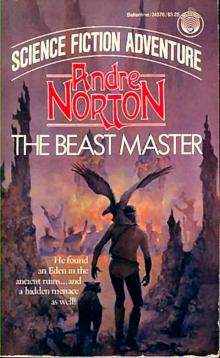 The Beast Master bm-1
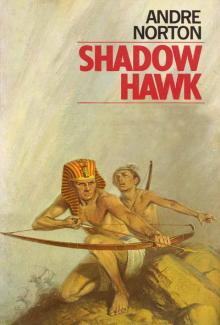 Shadow Hawk
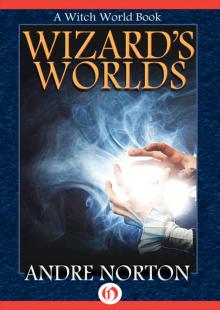 Wizard's Worlds: A Short Story Collection (Witch World)
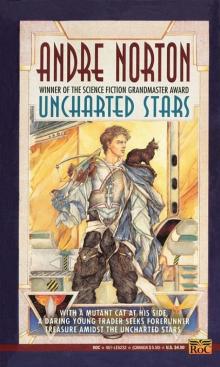 Murdoc Jern #2 - Uncharted Stars
 Crystal Gryphon
 Galactic Derelict tt-2
 Dragon Mage
 Spell of the Witch World (Witch World Series)
 Velvet Shadows
 Rebel Spurs dr-2
 Space Pioneers
 To The King A Daughter
 At Swords' Point
 Snow Shadow
 Lavender-Green Magic
 Scarface
 Elveblood hc-2
 Fur Magic
 Postmarked the Stars sq-4
 A Taste of Magic
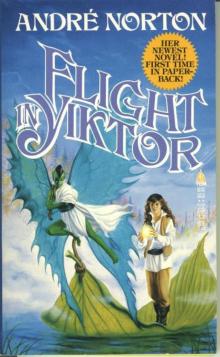 Flight in Yiktor ft-3
 Golden Trillium
 Murders for Sale
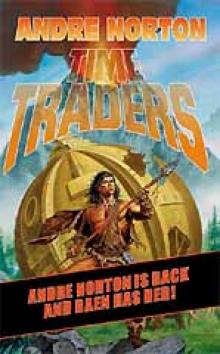 Time Traders tw-1
 Sargasso of Space sq-1
 Murdoc Jern #1 - The Zero Stone
 Sorceress Of The Witch World ww-5
 Time Traders II
 Magic in Ithkar 3
 Key Out of Time ttt-4
 Magic in Ithkar
 Voodoo Planet vp-1