
- Home
- Andre Norton
Space Service Page 3
Space Service Read online
Page 3
“The remaining atmosphere containing nitrogen and carbon dioxide is then sterilized by passage over plates heated to five hundred degrees, the gases are then cooled and sucked into the ship’s lungs.
“These lungs are chlorophyl banks. They are large glassite cylinders filled with synthetic chlorophyl. This is a very delicate substance with no immune property at all and becomes infected readily. Just look at the stuff crosseyed and it starts to decay. Nature protects her chlorophyl by means of the cell membrane but here we use it in its pure protoplasmic state.
“In each tank are actinic generators. As the carbon dioxide trickles up from below, photosynthesis converts the carbon dioxide into carbohydrates. Oxygen is a by-product. It’s sucked into the negatron, humidified and pushed by blowers through the arterial system.”
“Very concise, doctor,” Nord said. “Let’s go in and check your new detail.”
Air treatment was located on the third deck, just aft the crew’s galley in the central section of the ship. The mechanical part of the system was a miracle of chromium and gleaming surgical white. Air sucked through snaking ducts sounded shrilly defiant; the whirring screams of the blowers were the overtones of thin-edged menace. The ducts were shiny with beady sweat and the compartment’s cold, dry air was icily chilly.
The air crew stood around with tight, strained faces. Above all the many activities of the ship, they knew how much the thin thread of life depended on their proper performance of duty. When the captain and the doctor walked in, worry lifted from their strong faces and they turned to hide the relief from fear.
“Let’s see the banks.” Nord shouted above the keening scream of air. He could not help but notice the shining confidence they felt in him.
The chlorophyl banks were normally guarded by locked doors which opened from the alcohol showers. A ten-minute alcohol shower on the impervious lightweight armor lessened considerably any danger of infecting the chlorophyl banks. Sterile precautions were now unnecessary because the two doors were already partly open.
The space surgeon pointed to a cup by the sump in the deck of the shower. Nord nodded. “Maybe we’re lucky he did get drank or perhaps we wouldn’t have caught him before he started putting chlorine into the air system.”
Stacker shook his head. “He was too resentful of authority. Long before he would have gotten to that point he would have told you about it in one way or another. He would have had to brag about his mind. The chances are, though, he would have knocked you out some night, taken the keys to the bleeder valves and released all the air in space.”
“Nice guy to have around the house.” Nord forced a smile. He gestured towards the inner door. “Shall we go in?”
Normally the four meter vats were glistening green cylinders. Where vitiated air entered from below—because of higher carbon dioxide content—the thick media was a brilliant, leafy green which shaded to a faint glaucous yellow at the top. The compartment should have had the sharp, earthy fragrance of jungle vegetation.
A spasm of despair made Nord wince as he walked into the compartment. The bottom of the cylinders was covered with a thick sediment of sepia-colored muck; ocherous splotches and shafts of putrid yellow matter filled the vats. The surface was a jaundiced froth which bubbled over the top and lay on the metal deck like careless, yolky splotches of sickly yellow paint. The warm, humid air was stifling and the odor of decay was a nauseating stench.
“Whew.” Stacker wrinkled his nose in disgust.
Corbett nodded silently, wiped his sweaty brow. He turned to the air chief who walked into the compartment.
“Did you find any?” Stacker asked eagerly.
“There isn’t so much as a can of spare stuff left anywhere,” the chief said.
Dr. Stacker turned away and Nord sensed he did not care to discuss a patient’s illness with a crew member. “We didn’t expect to find any spare media. While Mr. Bickford is ill the space surgeon will be acting air officer.” He turned to the physician, waved towards the sick-looking drums. “Can we do anything with this stuff? Re-sterilize it or something?”
The doctor shook his head sadly. “Dump it in space,” he suggested with a wan smile.
“Not yet.” Corbett hesitated to dump anything in space except as a last resort. “It’s still converting some air.” He led the way into Bickford’s former office, prowled about the office nervously, studied the air instruments, walked slowly back to the desk, leaned on the corner.
“C02 content has gone up a tenth of a point in the last hour. Hadn’t you better start using the chemical removers?”
“We won’t use those until the per cent gets much higher. Not until it reaches two point five or even three.”
“I just noticed we have five thousand kilos of oxygen stored in the bulkheads.” A shade of bitterness crept into his voice. “At least he left us that.”
Dr. Stacker started figuring with stylus and pad. “The average man,” he calculated, “uses an average of five kilos of oxygen in twenty-four hours. We have fifty men. That means twenty days of normal oxygen supply.”
“Which is what the bureau says will be normal for all ships.”
“Why not try and make it back to Earth. We’re only one hundred and three days out.”
“I’ve thought of it,” Corbett admitted. “I refused to chart a cloud just a few hours ago because it would take so long to reach terminal velocity once we went back to extropic drive. At our present velocity we couldn’t divert at better than a hundred angstroms of angular radius. It would take almost two months to complete our turn and then we’d have to start decelerating for Earth. If we slow and turn, we couldn’t reach terminal velocity before having to decelerate again. As far as space time is concerned it’s as far one way as it is the other.”
The doctor shrugged his shoulders. “Might as well keep on, then.” His level voice was so impersonal Nord could not help but feel admiration for him.
“Do you have any idea how we might augment our air supply? Maybe,” he suggested, “changing the rate of air flow, temp or number of charged ions might help us. You know,” the captain admitted candidly, “I don’t even know why we change the rate of air flow or charge the air. I once did but I’ve long since forgotten.”
Stacker pulled a plastic cigarette case from his pocket, touched the stud, offered the lighted cigarette to the captain. “It’ll probably be our last one,” he said, taking one for himself.
“In a general way,” he said, answering the question, “it might be said that moist air is depressing and enervating while dry air is tonic and stimulating. Metabolism slows in warm air, speeds up in cool air. It is also known that air motion is a factor of tremendous importance in ventilation in that it contributes to our sense of wellbeing and comfort. The pat of a current of air upon the skin stimulates the cutaneous sensory fibers, acts directly on metabolism and the vasomotor system.
“Air currents as low as three-hundredths meter per second will give a perceptible stimulus to the sensory nerves around the skin and mouth. The variation of air flow and temperature is stimulating and explains the preference of open windows over mechanical systems of air conditioning. This variation is why there is no sensation of stuffiness in modern ships.
“We treat the air here so that it has an ionic content of ten to the sixth per cc of negative ions. Positive ions increase the respiratory rate, B.M.R. and blood pressure. Negative ions produce a feeling of exhilaration and sublime health.” He inhaled deeply, let smoke trickle slowly from his nose. “I’d recommend we increase our temperature by five or six degrees, slow down air motion and require all men not actually needed to remain in their bunks. Of course all exercise, smoking, even loud talking will have to be forbidden. I’ll change the diet so we’ll have a low specific dynamic action, use less oxygen that way. Make the men more groggy, too. We can string out our oxygen another ten days.”
Nord squeezed out his cigarette in Bickford’s ash tray. “And after that?”
“ ‘Good sp
acemen never die,’ ” he quoted a line from the song of the space corps softly, “ ‘they just travel far.’ ”
“Will it be bad towards the end?”
The doctor looked down at his polished nails. “Very,” he whispered, “We’ll gasp out our last breath hating the day we were born. It’ll not be easy because we’ll have so long to know it’s coming.”
“In fifteen days I’ll have the crew write their final letters. I want to write one to my mother and you’ll want to write one to your fiancée. You were going to marry when we earthed.”
“Isn’t there a chance we might cross another ship?”
“There isn’t a ship for another three months at least.”
“Well we won’t be around to see it.” Stacker forced a thin laugh. “When the end comes, Bickford will really be happy. But he could have done a lot worse things if he’d had more time to think about them. But this will be bad enough.”
Nord looked at him steadily. “You’ll spare us a bad finale.”
“You mean, you actually want me to . . . to . . .” He stopped talking abruptly, looked at the captain with narrowed eyes.
Nord knew the doctor did not wish to make him commit himself. He lifted his head, gaze steady, and his voice was like the muffled roll of an organ. “Mercy,” he said, “can only be the gift of the strong.”
Stacker stood up, held out his hand. “Will you tell me when you’ve set the dead lights?”
Nord nodded. “I’ll turn them on myself and call you.” Abruptly they shook hands.
“And the condemned, thanks to the psychopath, ate a hearty meal.”
Nord realized the inevitableness of their situation. He had an evanescent desire to go to the brig ward and wreathe Bickford in a flame pistol but he realized even as he thought it, how stupid an act it would be. It would be like trying to take revenge on nature. The psychopath was nothing more or less than an evolutionary attempt to make man learn to use his brain for the benefit of others and not to live out a life of selfish purpose.
Their situation was a result of Bickford and he was a result of man’s groping attempts to use his mind. How little all that philosophy would help them now. Nord projected his mind ahead, saw himself at the last, coughing against the thin, lifeless air; he saw his crew looking at him with sightless, staring eyes as they slumped wearily down to die on the cold, metal deck.
He saw his ship, hurtling through space, taking a course tangent to Lanvin. The grim dead lights would shine on her bow, telling of their fate. The outer port would be open to make entrance by the investigating party an easy matter.
Some distant day, months from now, they would board the ship, study the log, cremate their remains. They would cradle the ship, open the holds, remove the freight. New tractors would till Lanvin’s fresh, fallow soil and earthly vegetables would grow there.
Their names would be engraved on a bronze plaque in company with thousands of other spacemen who had died, that men might see the stars and beyond. Even though they did die, they had made their little contribution to the cause of man. New things would grow in new places: other than that, man could have no object for his existence. New things to grow in new places.
Lanvin, Planet IV., Sun 3, Sirius System is a terrestrial-like planet. It has three large continents and well over a million islands dot its shallow seas. It is a tourist’s mecca, a farmer’s paradise.
The Space Yard of the Force is located on Centralia, largest of the land masses. The commercial lines land on Desdrexia; they claim the climate is better there. Actually it is just as hot on either of the continents. But Mount Helithon is on Desdrexia. The sight of that seventy-five-thousand-meter mountain rising from the silky, sanded plain, its pinnacle shimmering like a crimson diamond, made too beautiful a picture for the teleposters. The commercial psychologists couldn’t afford to pass it up.
Lanvin has no satellite so the quarantine station was located on Mount Helithon. Dr. Leland Donaldson was Quarantine Officer for the Public Health Service. Because he passed pratique on commercial and government vessels he knew all officials of the big companies and the local brass hats of the service.
He called Admiral Gates, crusty commandant of the yard, invited him to his lofty station for some beer. Not Lanvin’s synthetic stuff, but real, old-fashioned beer from Earth.
The admiral looked over his foamy mug at the quarantine officer. His thick jaws crunched on a salt stick. His wrinkled eyes held a glitter like freshly cut steel. He liked Donaldson but sometimes he wondered if he didn’t like his beer better.
“Has the 136 left yet?” Donaldson asked after their second stein.
“The 136,” the admiral hesitated. “That’s young Corbett’s ship. They’re Earthing tomorrow.”
“Did you go aboard her?”
“Me? Go aboard her?” The admiral looked shocked. “Why should I? I have a staff to do that sort of thing, you know. They brought out a lot of stuff for the Colonial Office. Tractors, you know, harrowers, things they use to make things grow in the ground, seeds and well, you know.” He waved his stein about the room, slopping some of the beer on Donaldson’s tesselated floor.
“Seeds,” Donaldson started to laugh.
“Why laugh,” Admiral Gates snorted testily. “One of my lieutenants went aboard, came back reporting the ship was spotless, decks like polished glass. Not even so much as a hull scratch. Outer skin a bit burned but perfectly normal. But perfectly normal, you know. He said he left you one patient, chap by the name of Bickley or Bikeford or something. Civilian, politician. You know about that sort of thing. The lieutenant said, Corbett would go places in the Service, had fertile imagination, fertile, you know.”
“Fertile,” Donaldson chirped. “Then you don’t know?”
“Then I don’t know what?” Admiral Gates’ eyes grew frosty. “Of course I don’t know. How should I know? What should I know?” Donaldson told him. “About a hundred days out from Earth, they were just reaching terminal velocity and their chlorophyl went sour and started to decay.”
“No trouble there, ships always carry spare stuff. It’s electron fever that gets me. Hate the stuff, you know, high speed, space-free electrons going through the skin. It’s bad.” He shivered and rubbed the wrinkled, red skin of his face. His brows puckered and his lids closed to tiny slits. “Why did their chlorophyl go bad?”
“They had a psychopath aboard. A civilian who was placed in charge at the last minute to manage their air. Had a record of police arrests a mile long, family shipped him out here hoping he would turn over a new leaf or something.” Donaldson snorted rudely, “As if a psychopath would. This guy got mad at the ship and all inside it and spit in their chlorophyl. It got infected but quick!”
“But they had spare stuff.”
“They didn’t though,” Donaldson pointed out. “Bickford gave it all away. Traded it all for some tools or something to gain favor with some rich dodo. They were really in a spot.”
“A psychopath aboard,” the admiral shook his head. “That’s bad. They’re dangerous. They crawl into positions of responsibility and then when you need ’em they blow up, tear your ship to little meteors. Happens too often. The space surgeons should be more careful. They didn’t have any spare chlorophyl, you say. Their own lungs were going bad.” He took a big swallow of beer. Then he exploded. “Then how in the name of Great Space did they get here?”
“Well,” Donaldson spoke slowly, as if tasting every word. “Their stuff was decaying fast. They couldn’t recharge their tanks. Asphyxiation was shaking hands with the boys. The space surgeon was set to make things easy at the end with poison in the food or something. Then the skipper’s fertile imagination comes through with a roar.”
“Don’t say ‘skipper,” Admiral Gates interrupted petulantly, “hate the word. Makes me think of sail boats, sea and water, things like that, you know. Go ahead, tell the story,” he wagged his finger, “but if Corbett has done something wrong, I want the report in writing and officially and not over beer
.”
“Well, the captain,” Donaldson said in an annoyed tone, “got together with Stacker, the ship’s space surgeon, and they put half their crew to sleep with narcotol, left them that way for weeks, I guess. Cut down oxygen expenditure, you see.”
“And,” Admiral Gates shouted.
“The rest of them turned gardener.”
“What! You said gardener!”
“They turned gardeners but big. They pulled their sewage tanks, dried the stuff in the ship’s ovens, spread the slew over the recreation deck. They rigged actinic generators over that, shunted their venous air straight through that room and planted seed in their synthetic ground. They had hydroponic gardens all over the ship.”
“Would it grow fast enough to convert carbon dioxide to oxygen?”
“Well it did,” the port doctor said succinctly. “They were having fresh, green vegetables from their own garden by the time they planeted at quarantine.”
The wrinkles around the admiral’s eyes unfolded. “Maybe it’s a good thing to have a psychopath aboard, keeps a guy on his toes, you know. Corbett claimed a five-hour delay over Central Sea after leaving quarantine wash. Wanted to empty and clean ship. Makes him a better captain. Yep, it’s a good thing—”
“It’s a good thing he did have a fertile imagination, or else you would be writing letters to his family.”
Lieutenant Nord Corbett stood at attention before the blue-iced eyes of the admiral. Through the port behind the commandant he could see his cradled ship. The ground crew had finished the hull polish and in the glare from Lanvin’s hot, white sun it glittered like a platinum flame.
“May I have my clearance for Earth, sir?”
The admiral’s bushy brows furrowed. “Ready to blow; taking back fifty passengers, you know. Got plenty of water and air?” He rumbled. “Checking them all in?”
“Yes, sir.” Nord’s face crimsoned under the icy stare of the admiral. “They’re all checked. Dr. Stacker, my space surgeon, is giving them psychophysicals now.”
 Ride Proud, Rebel!
 The People of the Crater
 Rebel Spurs
 The Gifts of Asti
 Space Service
 Perilous Dreams
 Plague Ship
 Voodoo Planet
 Star Born
 The Zero Stone
 Knave of Dreams
 Five Senses Box Set
 The Time Traders
 Catfantastic II
 Star Hunter
 The Defiant Agents
 Key Out of Time
 Space Police
 The Monster's Legacy
 Imperial Lady (Central Asia Series Book 1)
 All Cats Are Gray
 Storm Over Warlock
 Warlock
 Firehand
 Echoes In Time # with Sherwood Smith
 Ciara's Song
 The Sioux Spaceman
 Firehand # with Pauline M. Griffin
 The Forerunner Factor
 The Jargoon Pard (Witch World Series (High Hallack Cycle))
 Trey of Swords (Witch World (Estcarp Series))
 Children of the Gates
 Atlantis Endgame
 Red Hart Magic
 Steel Magic
 Beast Master's Circus
 Iron Butterflies
 At Swords' Points
 The Iron Breed
 A Crown Disowned
 Moon Called
 Ralestone Luck
 Tales From High Hallack, Volume 3
 FORERUNNER FORAY
 High Sorcery
 Stand to Horse
 Flight of Vengeance (Witch World: The Turning)
 Gods and Androids
 Derelict For Trade
 Ice and Shadow
 Wraiths of Time
 Quag Keep
 The Scent Of Magic
 Mark of the Cat and Year of the Rat
 Storms of Victory (Witch World: The Turning)
 Catseye
 The Defiant Agents tt-3
 The Opal-Eyed Fan
 Sword Is Drawn
 ORDEAL IN OTHERWHERE
 Tales From High Hallack, Volume 1
 Wheel of Stars
 On Wings of Magic
 Ware Hawk
 The Key of the Keplian
 Ride Proud-Rebel
 Sea Siege
 Lost Lands of Witch World
 Horn Crown (Witch World: High Hallack Series)
 Three Against the Witch World ww-3
 Wizards’ Worlds
 Secret of the Stars
 Yankee Privateer
 Scent of Magic
 Beast Master's Planet: Omnibus of Beast Master and Lord of Thunder
 The White Jade Fox
 Silver May Tarnish
 Beast Master's Quest
 Knight Or Knave
 Sargasso of Space (Solar Queen Series)
 The Warding of Witch World
 Uncharted Stars
 Ten Mile Treasure
 The Game of Stars and Comets
 On Wings of Magic (Witch World: The Turning)
 Tales From High Hallack, Volume 2
 The Gate of the Cat (Witch World: Estcarp Series)
 Andre Norton - Shadow Hawk
 Merlin's Mirror
 Serpent's Tooth
 Sword in Sheath
 Ride Proud, Rebel! dr-1
 The Magestone
 The Works of Andre Norton (12 books)
 Andre Norton: The Essential Collection
 The Stars Are Ours! a-1
 Moon Mirror
 Warlock of the Witch World ww-4
 Garan the Eternal
 The Andre Norton Megapack
 Dare to Go A-Hunting ft-4
 The X Factor
 Web of the Witch World ww-2
 The Knight of the Red Beard-The Cycle of Oak, Yew, Ash and Rowan 5
 Star Rangers
 Witch World ww-1
 Daybreak—2250 A.D.
 Moonsinger
 Redline the Stars sq-5
 Star Soldiers
 Empire Of The Eagle
 The Hands of Lyr (Five Senses Series Book 1)
 Android at Arms
 Lore of Witch World (Witch World Collection of Stories) (Witch World Series)
 Trey of Swords ww-6
 Gryphon in Glory (Witch World (High Hallack Series))
 Octagon Magic
 Dragon Magic
 Three Hands for Scorpio
 The Prince Commands
 The Beast Master bm-1
 Shadow Hawk
 Wizard's Worlds: A Short Story Collection (Witch World)
 Murdoc Jern #2 - Uncharted Stars
 Crystal Gryphon
 Galactic Derelict tt-2
 Dragon Mage
 Spell of the Witch World (Witch World Series)
 Velvet Shadows
 Rebel Spurs dr-2
 Space Pioneers
 To The King A Daughter
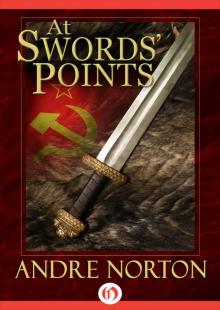 At Swords' Point
 Snow Shadow
 Lavender-Green Magic
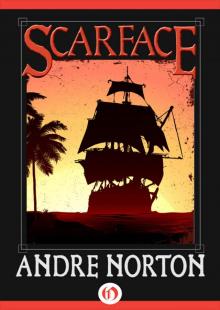 Scarface
 Elveblood hc-2
 Fur Magic
 Postmarked the Stars sq-4
 A Taste of Magic
 Flight in Yiktor ft-3
 Golden Trillium
 Murders for Sale
 Time Traders tw-1
 Sargasso of Space sq-1
 Murdoc Jern #1 - The Zero Stone
 Sorceress Of The Witch World ww-5
 Time Traders II
 Magic in Ithkar 3
 Key Out of Time ttt-4
 Magic in Ithkar
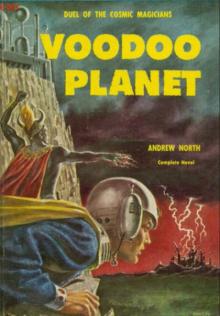 Voodoo Planet vp-1