
- Home
- Andre Norton
High Sorcery Page 8
High Sorcery Read online
Page 8
Others came back to the valley during those days. Out of the black horror of a Nazi extermination camp crawled a pale, twisted creature, warped in body, perhaps also in mind. She who had once been the Countess Ana came quietly, almost secretly, among us again. One day she had not been there, and the next she was settled in the half-ruinous gate house of the castle with old Mald, who had been with her family long before her own birth.
The Countess Ana had been a woman of education before they had taken her away, and she had not forgotten all she had learned. There was no doctor in the valley, twenty families could not have supported one. But the Countess was versed in the growing of herbs and their healing uses, and Mald was a midwife. So together they became the wise women of our people. After a while we forgot the Countess Ana's deformed body and ravaged face, and accepted her as we accepted the crooked firs growing close to the timber-line. Not one of us remembered that she was yet in years a young woman, with a young woman's dreams and desires, encased in a hag's body.
It was late October when our fate came upon us, up river in a power boat. The new masters would set in our hills a station from which their machines could spy upon the outer world they feared and hated; and to make safe the building of that station they sent ahead a conqueror's party. They surprised us and something had drained out of the valley. So many of our youth were long since bleached bones that, save for a handful, perhaps only the number of the fingers on my two hands, there was no defiance; there was only a dumb beast's endurance. Within three days Colonel Andrei Varoff ruled from the castle as if he had been Count, lord, of a tired, cowed people.
Three men they hauled from their homes and shot on the first night, but Ivor was not one. He had been warned and, with the core of his men, had taken again to the mountains. But he left Dagmar behind, by her own will.
Mald and the Countess were warned, too. When Varoff marched his pocket army into the castle, the gate house was deserted; and those who thereafter sought the wise women's aid took another path, up into the black-green of the fir forest and close to a long stone partly buried in the ground within a circle of very old oaks, which had not grown so by chance. There in a game-station hut, those in need could find what they wanted, perhaps more.
Father Hansel had been one of the three Varoff shot out of hand, and there was no longer an open church in the valley. What went on in the oak glade was another matter. First our women drifted there, half ashamed, half defiant, and later they were followed by their men. I do not think the Countess Ana was their priestess. But she knew and condoned. For she had learned many things.
The wise women began to offer more than just comfort of body. It was a queer wild time when men in their despair turned from old beliefs to older ones, from a god of love and peace, to a god of wrath and vengeance. Old knowledge passed by word of mouth from mother to daughter was recalled by such as Mald, and keenly evaluated by the sharper and better-trained brain of the Countess Ana. I will not say that they called upon Odin and Freya (or those behind those Nordic spirits) or lighted the Beltane Fire. But there was a stirring, as if something long sleeping turned and stretched in its supposed grave.
Dagmar, for all her shrewd egotism (and egotism such as hers is dangerous, for it leads a man or woman to believe that what they wish is right), was a daughter of the valley. She was moved by the old beliefs; and because she had her price, she was convinced that all others had theirs. So at night she went alone to the hut. There she watched until the Countess Ana left. It was she who carried news and a few desperately gained supplies to those in hiding, especially Ivor.
Seeing the hunched figure creep off, Dagmar laughed spitefully, making a secret promise to herself that even a man she might choose to throw away would go to no other woman. But since at present she needed aid and not ill-will, she put that aside.
When the Countess was out of sight, Dagmar went in to Mald and stood in the half-light of the fire, proud and tall, exulting over the other woman in all the sensual strength and grace of her body, as she had over the Countess Ana in her mind.
“I would have what I desire most, Andrei Varoff,” she said boldly, speaking with the arrogance of a woman who rules men by their lusts.
“Let him but look on you. You need no help here,” returned Mald.
“I cannot come to him easily; he is not one to be met by chance. Give me that which will bring him to me by his own choice.”
“You are a wedded wife.”
Dagmar laughed shrilly. “What good does a man who must hide ever in a mountain cave do me, Old One? I have slept too long in a cold bed. Let me draw Varoff, and you and the valley will have kin within the enemy's gate.”
Mald studied her for a long moment, and Dagmar grew uneasy, for those eyes in age-carved pits seemed to read far too deeply. But, without making any answer in words. Mald began certain preparations. There was a strange chanting, low and soft but long, that night. The words were almost as old as the hills around them, and the air of the hut was thick with the scent of burning herbs.
When it was done Dagmar stood again by the fire, and in her hands she turned and twisted a shining, silken belt. She looped it about her arm beneath her cloak and rugged at the heavy coronet of her braids. The long locks Mald had shorn were not missed. Her teeth showed in white points against her lip as she brought out of her pocket some of those creased slips of paper our conquerors used for money.
Mald shook her head. “Not for coin did I do this,” she said harshly. “But if you come to rule here as you desire, remember you are kin.”
Dagmar laughed again, more than ever sure of herself. “Be sure that I will, Old One.”
Within two days the silken belt was in Varoff’s hands, and within five Dagmar was installed in the castle. But in the Colonel she had met her match, for Varoff found her no great novelty. She could not bend him to her will as she had Ivor, who was more sensitive and less guarded. But, being shrewd, Dagmar accepted the situation with surface grace and made no demands,
As for the valley women, they spat after her, and there was hate in their hearts. Who told Ivor I do not know, though it was not the Countess Ana. (She could not wound where she would die to defend.) But somewhow he managed to get a message to Dagmar, entreating her to come to him, for he believed she had gone to Varoff to protect him.
What that message aroused in Dagmar was contempt and fear: contempt for the man who would call her to share his harsh exile and fear that he might break the slender bond she had with Varoff. She was determined that Ivor must go. It was very simple, that betrayal, for Ivor believed in her. He went to his death as easily as a bullock led to the butcher, in spite of warnings from the Countess Ana and his men.
He slipped down by night to where Dagmar promised to wait and walked into the hands of the Colonel's guard. They say he was a long time dying, for Andrei Varoff had a taste for such treatment for prisoners when he could safely indulge it. Dagmar watched him die; that, too, was part of the Colonel's pleasure. Afterward there was a strange shadow in her eyes, although she walked with pride.
It was two months later that she made her second visit to Mald. But this time there were two to receive her. Yet in neither look, word, nor deed, did either show emotion at that meeting; it was as if they waited. They remained silent, forcing her to declare her purpose.
“I would bear a son.” She began as one giving an order. Only—confronted by those unchanging faces she faltered and lost some of her assurance. She might even have turned and gone had the Countess Ana not spoken in a cool and even voice.
“It is well known that Varoff desires a son.”
Dagmar responded to that faint encouragement. “True! Let me be the one to bear the child and my influence over him will be complete. Then I can repay—it is true, you frozen faces!” She was aroused by the masks they wore.
“You believe that I betrayed Ivor, not knowing the whole of the story. I have very little power over Varoff now. But let me give him a son; then there will be no limit on w
hat I can demand of him—none at all!”
“You shall bear a son; certainly you shall bear a son,” replied the Countess Ana. In the security of that promise Dagrnar rejoiced, not attending to the finer shades of meaning in the voice which uttered it.
“But what you ask of us takes preparation. You must wait and return when the moon once more waxes. Then we shall do what is to be done!”
Reassured, Dagmar left. As the door of the hut swung shut behind her, the Countess Ana came to stand before the fire, her crooked shape making a blot upon the wall with its shadow.
“She shall have a son, Mald, even as I promised, only whether thereafter she will discover it profitable—”
From within the folds of her coarse peasant blouse, she brought out a packet wrapped in a scrap of fine but brown-stained linen. Unfolding the cloth, she revealed what it guarded: a lock of black hair, stiff and matted with something more than mud. Mald, seeing that and guessing the purpose: for which it would be used, laughed. The Countess did not so much as smile.
“There shall be a son, Mald,” she repeated, but her promise was no threat. There was a more subtle note, and in the firelight her eyes gleamed with an eagerness to belie the ruin of her face.
Within two days came the night she had appointed and Dagmar with it. Again there was chanting and things done in secret. When Dagmar left at dawn she smiled a thin smile. Let her but bear a child and they would see, all would see, how she would deal with those who now dared to look crosswise after her and spit upon her footprints! Let such fools take heed!
Shortly thereafter it became known that Dagmar was with child. Varoff could not conceal his joy. During the months which followed he made plans to send her out of the valley, that his son might be born with the best medical care; and he loaded her with gifts. But the inner caution of an often-disappointed man made him keep her prisoner.
Dagmar did not leave the valley. She could not make the rough trip by river and sea. The road over the mountain was but a narrow track, and just before Varoff prepared to leave with her there was such a storm as is seldom seen at that time of year. A landslide blotted out the road. The Colonel cursed and drove his own soldiers and the valley men to dig a way through, but even he realized it could not be cleared in time.
So he was forced to summon Mald. His threats to her were cold and deadly, for he had no illusions concerning the depth of the valley's hatred. But the old woman bore his raving meekly, and he came to believe her broken enough in spirit to be harmless. Thus, though he still suspected her, he brought her to Dagmar and bade her use her skill.
For a night and a day Dagmar lay in labor, and what she suffered must have been very great. But greater still was her determination to be the one to place a living son in the arms of Andrei Varnff.
In the evening the child was born, its thin cry echoing from the walls of the ancient room like the wail of a tormented soul. Dagmar clawed herself up.
“Is it a boy?” she demanded hoarsely.
Mald nodded her white head. “A boy.”
“Give him to me and call—”
But there was no need to complete that order for Andrei Varoff was already within the chamber and Dagmar greeted him proudly, the baby in the curve of her arm. As he strode to the bedside she thrust away the swaddling blanket and displayed the tiny body fully. But her eyes were for Varoff rather than for the child she had schemed to make a weapon in her hand.
“Your son—” she began. Then something in Varoff's eyes as he stared down upon the child chilled her as if naked steel, ice cold, had been plunged into her sweating body.
For the first time she looked upon the baby. This was her key, a son for Varoff.
Her scream, thin and high, tore through the storm wind moaning outside the narrow window. Andrei loomed over her as she cowered away from what she read in his eyes, in the twist of his thick lips.
It was Mald who snatched the baby and sped from that room, at a greater speed than her years might warrant, to be joined by another within a secret way of the castle. The twisted, limping figure took the child eagerly into long empty arms, to hold it tenderly as a long-desired gift.
But neither of the two Mald left were aware of her flight What was done there cannot be told, but before the coming of dawn Varoff shot himself.
Where is the magic in all this, besides the muttering of old women? Just this: when Dagmar demanded a son from the Countess Ana, she indeed obtained her desire. But the child she bore had fine black hair growing in a sharp peak above a wolf cub's face—a face which Andrei Varoff and Dagmar Kark had excellent reason to know well. Who fathered Dagmar's child, a man nigh twelve months dead? And who was its true mother? Think carefully, my friend.
Not a pretty story, eh? But, you see, old gods do not tend to be mild when called on to render justice.
ULLY THE PIPER
THE DALES of High Halleck are many and some are even forgotten, save by those who live in them. During the great war with the invaders from overseas, when the lords of the dales and their armsmen fought, skulked, prospered or sank in defeat, there were small places left to a kind of slumber, overlooked by warriors. There, life went on as it always had, the dalesmen content in their islands of safety, letting the rest of the world roar on as it would.
In such a dale lay Coomb Brackett, a straggle of houses and farms with no right to the title of village, though so the indwellers called it. So tall were the ridges guarding it that few but the wild shepherds of the crags knew what lay beyond them, and many of their tales were discounted by the dalesmen. But there were also ill legends about those heights that had come down from the elder days when humankind first pushed this far north and west. For men were not the fast to settle here, though story said that their predecessors had worn the outward seeming of men for convenience, their real aspect being such that no dalesman would care to look upon them by morn light
While those elder ones had withdrawn, seeking a refuge in the Beyond Wilderness, yet at times they returned on strange pilgrimages. Did not the dalesmen keep certain feast days—or nights—when they took offerings up to rocks which bore queer markings that had not been chiseled there by wind and weather? The reason for those offerings no man now living could tell, but that luck followed their giving was an established fact.
But the dale was good enough for the men of Coomb Brackett. Its fields were rich, a shallow river winding through them. Orchards of fruit flourished and small woodland copses held nut trees which also bore crops in season. Fat sheep fed placidly in the uplands, cattle ambled to the river to drink and went then to graze once more. Men sowed in spring, harvested, in early autumn and lay snug in their homesteads in winter. As they often said to one another, who wanted more in this life?
They were as plump as their cattle and almost as slow moving at times. There was little to plague them, for even the Lord of Fartherdale, to whom they owed loyalty, had not sent his tithemen for a tale of years. There was a rumor that the lord was dead in the far-off war. Some of the prudent put aside a folding of woolen or a bolting of linen, well sprinkled with herbs to keep it fresh, against the day when the tithes might be asked again. But for the most part they spun their flax and wool, wove it into stout cloth for their own backs, ate their beef and mutton, drank ale brewed from their barley and wine from their fruit, and thought that trouble was something which struck at others far beyond their protecting heights.
There was only one among them who was not satisfied with things as they comfortably were, because for him there was no comfort. Ully of the hands was not the smallest, nor the youngest of the lads of Coomb Brackett—he was the different one. Longing to be as the rest filled him sometimes with a pain he could hardly bear.
He sat on his small cart and watched the rest off to the feasting on May Day and Harvest Home; and he watched them dance Rings Around following the smoking great roast at Yule—his clever hands folded in upon themselves until the nails bit sorely into the flesh of his palms.
There had bee
n a tree to climb when he was so young he could not rightly recollect what life had been like before that hour. After he fell he had learned what it meant to go hunched of back and useless of leg, able to get from one place to another only by huddling on his cart and pushing it along the ground with two sticks.
He was mender-in-chief for the dale, though he could never mend himself. Aught that was broken was brought to him so that his widowed mother could sort out the pieces, and then Ully worked patiently hour by hour to make it whole again. Sometimes he thought that more than his body had been broken in that fall, and that slowly pieces of his spirit were flaking away within him. For Ully, being chained to his cart, was active in his mind and had many strange ideas he never shared with the world.
Only on a night such as this, when it was midsummer and the youth of the village were streaming up into the hills to set out first fruit, new bread, a flagon of milk and another of wine on the offering rock . . . He did not want to sit and think his life away! He was young in spirit, torn by such longings as sometimes made him want to howl and beat with his fists upon the ground, or pound the body which imprisoned him. But for the sake of his mother he never gave way so, for she would believe him mad, and he was not that—yet.
He listened to the singing as the company climbed, giving the rallying call to the all-night dancing:
“High Dilly, High Dally,
Come Lilly, Come Lally!
Dance for the Ribbons-
Dance for new Shoes!”
Who would dance so well this night that he would return by mom's light wearing the new shoes, she the snood of bright ribbons?
Not Stephen of the mill; he was as heavy-footed in such frolicking as if he carried one of the filled flour sacks across his ox-strong shoulders. Not Gretta of the inn, who so wanted to be graceful. (Ully had seen her in the goose meadow by the river practicing steps in secret. She was a kind maid and he wished her as well as he did any of those he thought of as the straight people.)
 Ride Proud, Rebel!
 The People of the Crater
 Rebel Spurs
 The Gifts of Asti
 Space Service
 Perilous Dreams
 Plague Ship
 Voodoo Planet
 Star Born
 The Zero Stone
 Knave of Dreams
 Five Senses Box Set
 The Time Traders
 Catfantastic II
 Star Hunter
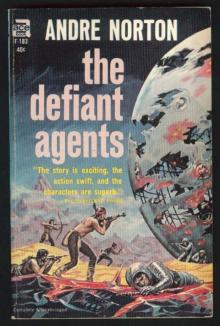 The Defiant Agents
 Key Out of Time
 Space Police
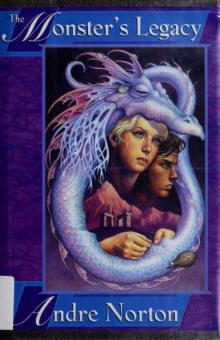 The Monster's Legacy
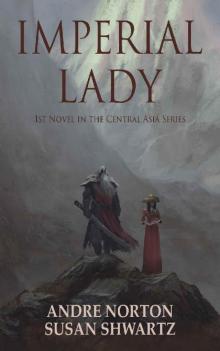 Imperial Lady (Central Asia Series Book 1)
 All Cats Are Gray
 Storm Over Warlock
 Warlock
 Firehand
 Echoes In Time # with Sherwood Smith
 Ciara's Song
 The Sioux Spaceman
 Firehand # with Pauline M. Griffin
 The Forerunner Factor
 The Jargoon Pard (Witch World Series (High Hallack Cycle))
 Trey of Swords (Witch World (Estcarp Series))
 Children of the Gates
 Atlantis Endgame
 Red Hart Magic
 Steel Magic
 Beast Master's Circus
 Iron Butterflies
 At Swords' Points
 The Iron Breed
 A Crown Disowned
 Moon Called
 Ralestone Luck
 Tales From High Hallack, Volume 3
 FORERUNNER FORAY
 High Sorcery
 Stand to Horse
 Flight of Vengeance (Witch World: The Turning)
 Gods and Androids
 Derelict For Trade
 Ice and Shadow
 Wraiths of Time
 Quag Keep
 The Scent Of Magic
 Mark of the Cat and Year of the Rat
 Storms of Victory (Witch World: The Turning)
 Catseye
 The Defiant Agents tt-3
 The Opal-Eyed Fan
 Sword Is Drawn
 ORDEAL IN OTHERWHERE
 Tales From High Hallack, Volume 1
 Wheel of Stars
 On Wings of Magic
 Ware Hawk
 The Key of the Keplian
 Ride Proud-Rebel
 Sea Siege
 Lost Lands of Witch World
 Horn Crown (Witch World: High Hallack Series)
 Three Against the Witch World ww-3
 Wizards’ Worlds
 Secret of the Stars
 Yankee Privateer
 Scent of Magic
 Beast Master's Planet: Omnibus of Beast Master and Lord of Thunder
 The White Jade Fox
 Silver May Tarnish
 Beast Master's Quest
 Knight Or Knave
 Sargasso of Space (Solar Queen Series)
 The Warding of Witch World
 Uncharted Stars
 Ten Mile Treasure
 The Game of Stars and Comets
 On Wings of Magic (Witch World: The Turning)
 Tales From High Hallack, Volume 2
 The Gate of the Cat (Witch World: Estcarp Series)
 Andre Norton - Shadow Hawk
 Merlin's Mirror
 Serpent's Tooth
 Sword in Sheath
 Ride Proud, Rebel! dr-1
 The Magestone
 The Works of Andre Norton (12 books)
 Andre Norton: The Essential Collection
 The Stars Are Ours! a-1
 Moon Mirror
 Warlock of the Witch World ww-4
 Garan the Eternal
 The Andre Norton Megapack
 Dare to Go A-Hunting ft-4
 The X Factor
 Web of the Witch World ww-2
 The Knight of the Red Beard-The Cycle of Oak, Yew, Ash and Rowan 5
 Star Rangers
 Witch World ww-1
 Daybreak—2250 A.D.
 Moonsinger
 Redline the Stars sq-5
 Star Soldiers
 Empire Of The Eagle
 The Hands of Lyr (Five Senses Series Book 1)
 Android at Arms
 Lore of Witch World (Witch World Collection of Stories) (Witch World Series)
 Trey of Swords ww-6
 Gryphon in Glory (Witch World (High Hallack Series))
 Octagon Magic
 Dragon Magic
 Three Hands for Scorpio
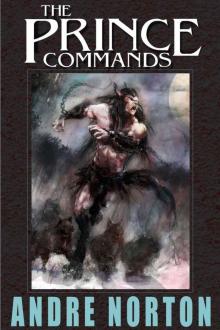 The Prince Commands
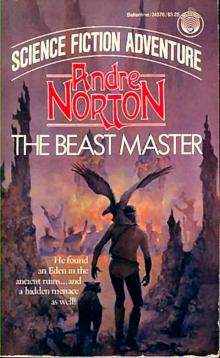 The Beast Master bm-1
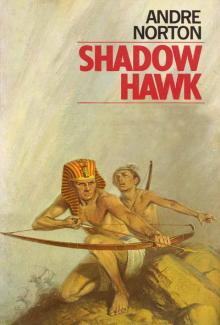 Shadow Hawk
 Wizard's Worlds: A Short Story Collection (Witch World)
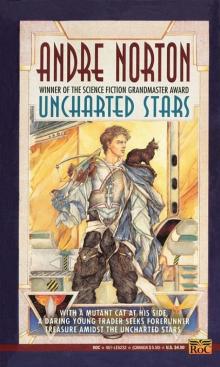 Murdoc Jern #2 - Uncharted Stars
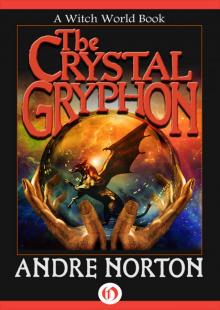 Crystal Gryphon
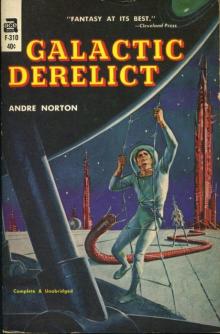 Galactic Derelict tt-2
 Dragon Mage
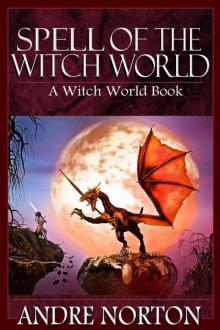 Spell of the Witch World (Witch World Series)
 Velvet Shadows
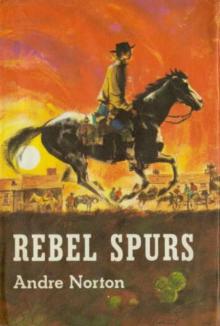 Rebel Spurs dr-2
 Space Pioneers
 To The King A Daughter
 At Swords' Point
 Snow Shadow
 Lavender-Green Magic
 Scarface
 Elveblood hc-2
 Fur Magic
 Postmarked the Stars sq-4
 A Taste of Magic
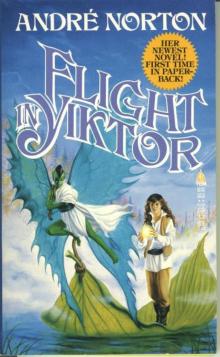 Flight in Yiktor ft-3
 Golden Trillium
 Murders for Sale
 Time Traders tw-1
 Sargasso of Space sq-1
 Murdoc Jern #1 - The Zero Stone
 Sorceress Of The Witch World ww-5
 Time Traders II
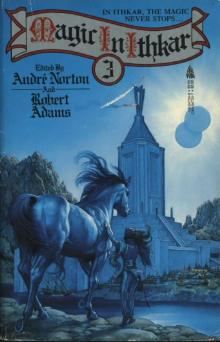 Magic in Ithkar 3
 Key Out of Time ttt-4
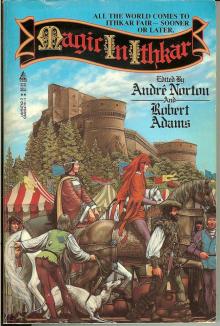 Magic in Ithkar
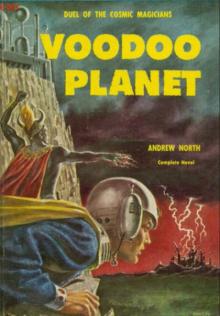 Voodoo Planet vp-1